Food packaging designs that make your next takeaway experience easy, ergonomic and eco-friendly! - Yanko Design
When information technology comes to nutrient packaging designs, there are certain criteria that take to be met, especially in the case of takeaway boxes. A good takeout box must store the food advisedly without anything spilling or leaking over, must keep it warm, and not to mention must be like shooting fish in a barrel and ergonomic plenty to acquit or transport around. And in this eclectic mix of requirements, if y'all can manage to throw in an appealing artful and good looks, you have a hit on your easily! Another benchmark that is being focused on a lot these days is Sustainability! Sustainable and eco-friendly designs really seal the bargain, as ignoring and paying no heed to the needs of the environment is no more than an option. And so nosotros've curated a collection of myriad takeout boxes, ranging from easily portable and ergonomic ones to environs-friendly ones likewise. Enjoy!

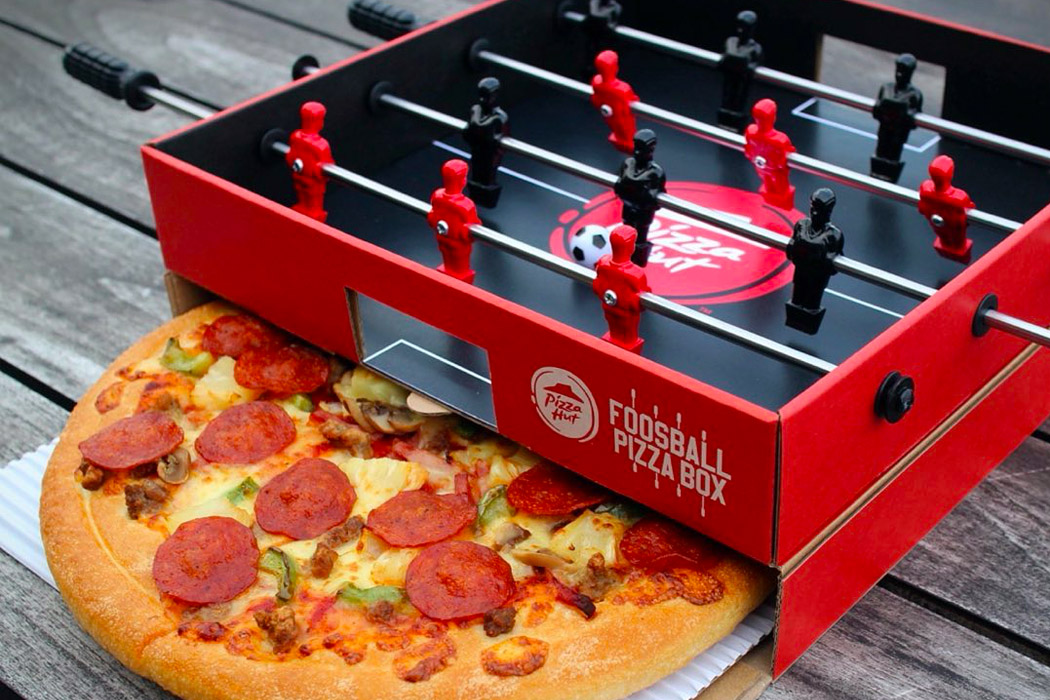
Pizza Hut + Ogilvy designed a limited edition pizza-box with a foosball tabular array built into the lid! The Foosball Pizza Box was created every bit a warm-up for the Europa League which begins October 22nd (Get it, Warm-upwardly? Pizza?). Wendy Leung, marketing manager of Pizza Hut explains, 'the Pizza Hut Foosball Pizza Box was a great opportunity to remind football game fans that pizza goes best with their football game. Launched at a time when everyone'south stuck in their houses, the box hopes to pulsate up enthusiasm, interest, and positivity. While diehard fans are simply waiting to become out and support their teams or play their own games of street football, the Pizza Hut Foosball Pizza Box provides a great safe alternative, allowing yous to battle information technology out with your friends in the comfort and rubber of your own homes. Winner gets an extra slice, perhaps? And if at that place's a tie, just equally divide the pie!
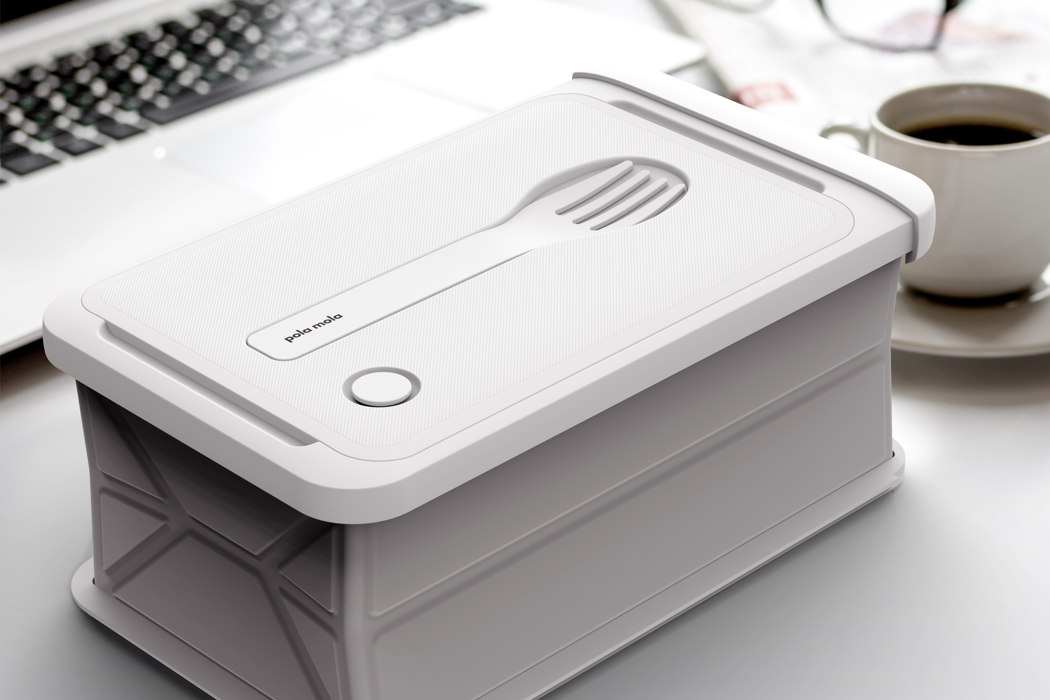

Molabox is like if the tiffin box had its ain Macbook Air moment. It comes with a collapsible silicone construction and a svelte metallic outer case that, when complanate, makes information technology expect like y'all're carrying an SSD around with yous. Nonetheless, when you desire to shop food in the Molabox, it expands to its true meridian, giving you lot enough storage for a good meal, forth with cutlery, and even a partitioning also, in case you desire to carry two separate items… simply nigh importantly, the Molabox doesn't contain any dispensable parts or virgin plastics. The case is fabricated from recycled aluminum, while the Molabox's chapeau and reusable cutlery are entirely crafted from recycled plastic. Information technology works perfectly as both a lunchbox and a takeaway box!
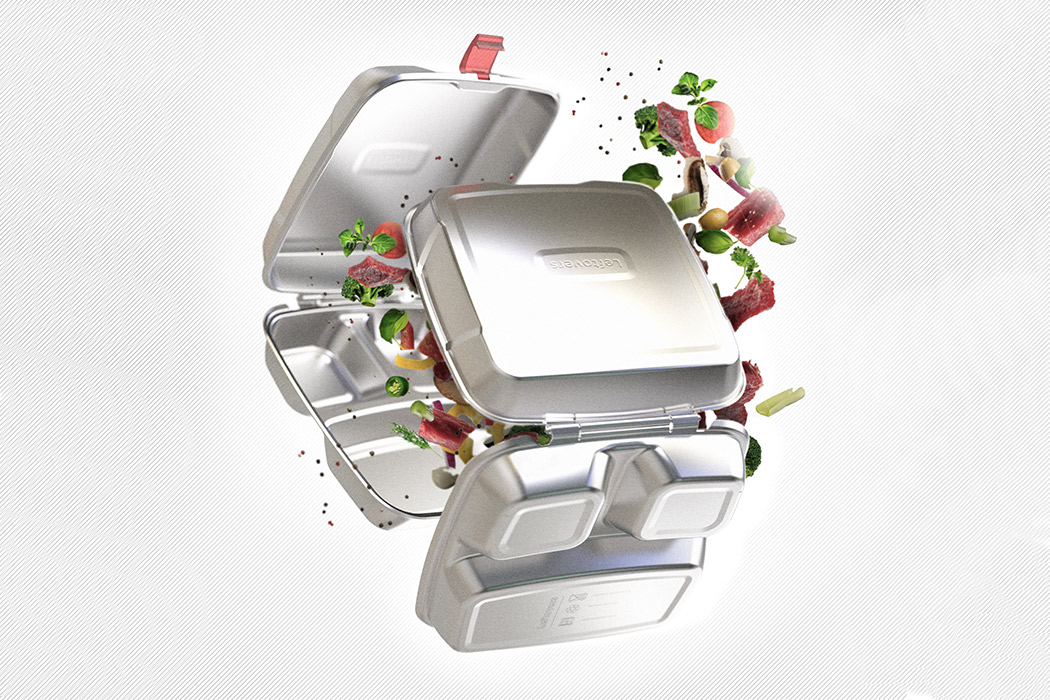
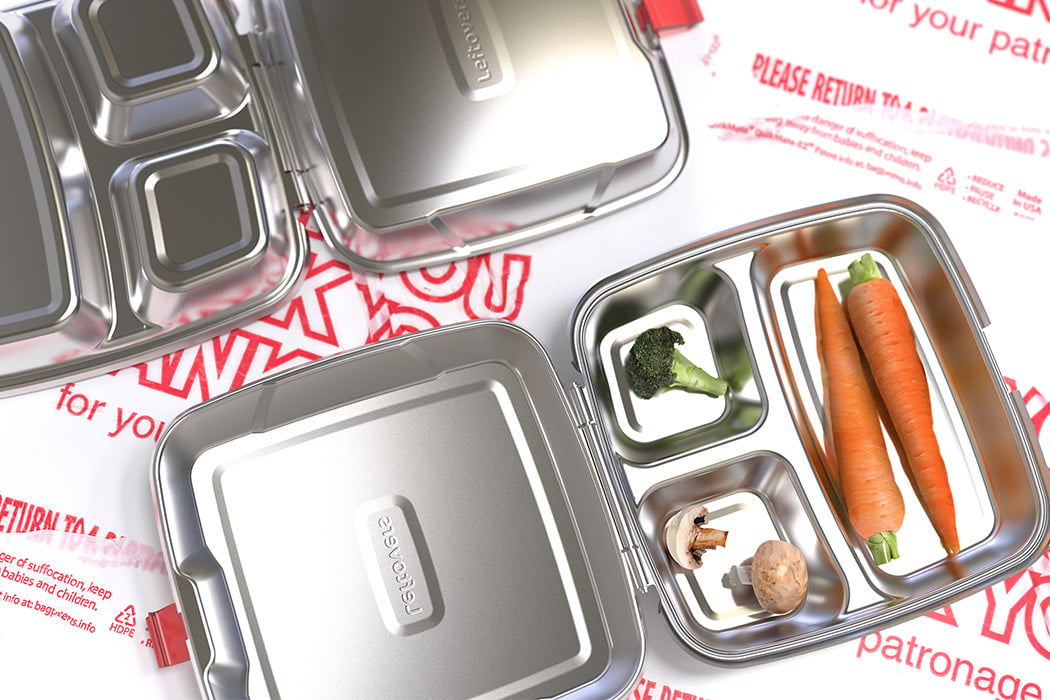
Styrofoam has a 24-hour lifespan but information technology is formed with materials that tin concluding for 500 years, tin can you imagine the landfills at the rate we eat this product? "We need to stop and remember most the environmental costs of our lifestyle," says Dungan when talking about the notoriously single-use packaging that has been adopted worldwide. The box itself is so widely recognized that information technology has transcended continents and languages, so Dungan's design aims to leverage its piece of cake recall value while delivering a stronger message on sustainable living. The product is rightly called Leftovers and hopes to exist a design that disrupts the normalization of polystyrene before it tin can get a mass-scale direct solution to the trouble, the first step is to educate. For convenience and functionality, it is also dishwasher condom and recyclable. The redesigned box has a stainless steel body that enhances its functionality as a reusable food container while also bringing attention to how ane small alter can reduce the amount in our trash can.
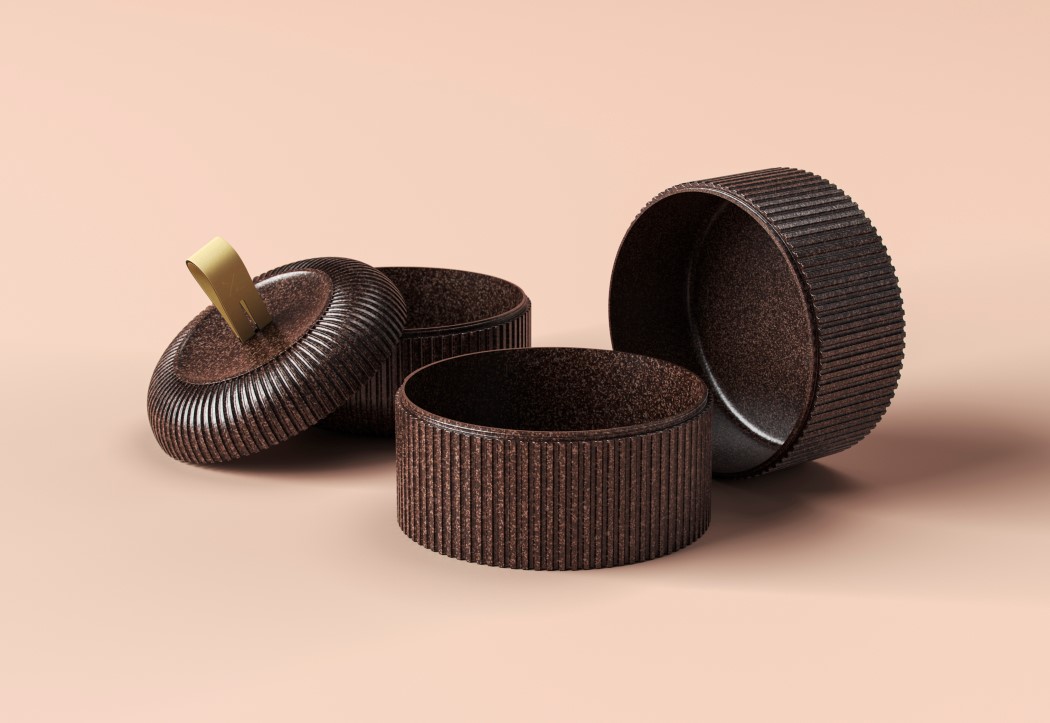
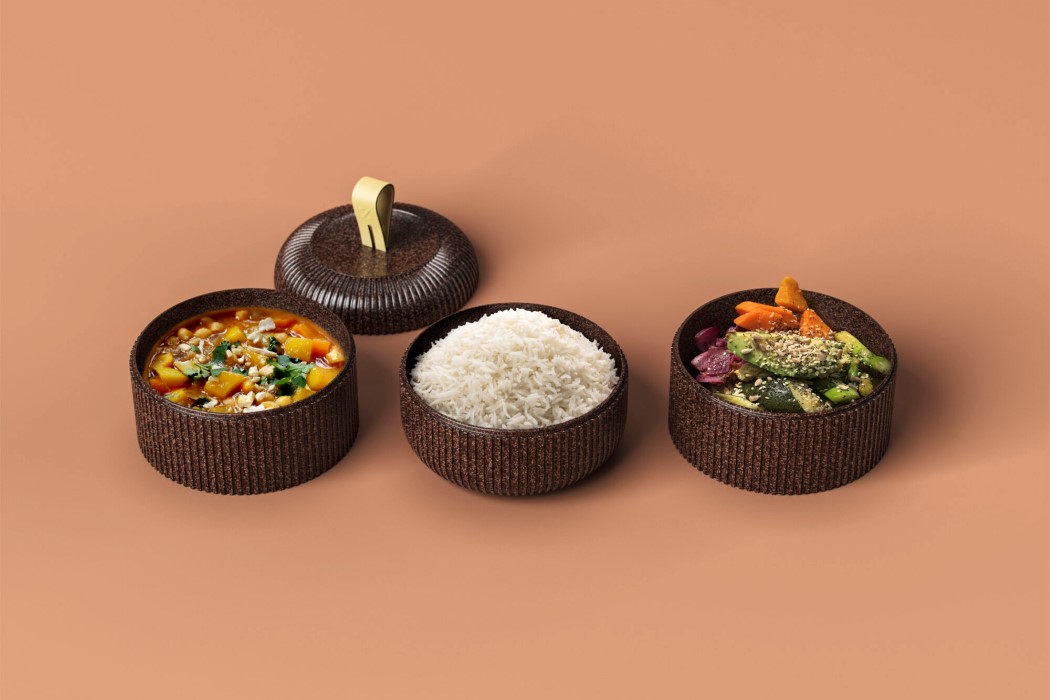
Created as a role of the Wallpaper* Re-Made project, these bio-blended containers are modeled to look like bento-boxes with a modular design that stacks up as your order increases, resulting in 1 larger box rather than multiple smaller boxes. This unique format provides a useful alternative to plastic containers (as it's waterproof and leakproof besides) and eventually reduces components past removing elements like lids (since the containers stack over and cover each other). Materials used to arts and crafts the packaging run into a range of criteria too, being heatproof, lightweight, recyclable, and insulating. The bio-composite polymer used to mold the containers themselves are made from cocoa-bean shells (a by-product of the cacao industry) by designer Paula Nerlich. The outer bag that carries the containers is made from all-natural materials also, including mycelium to insulate the interiors, a bioplastic known equally Nuatan to provide a robust outer shell, a natural leather derived from pineapple leaves called Piñatex for the outer container'southward chapeau, and Lexcell, a neoprene-free natural rubber used for the handles and straps on the handbag and the Bento containers.
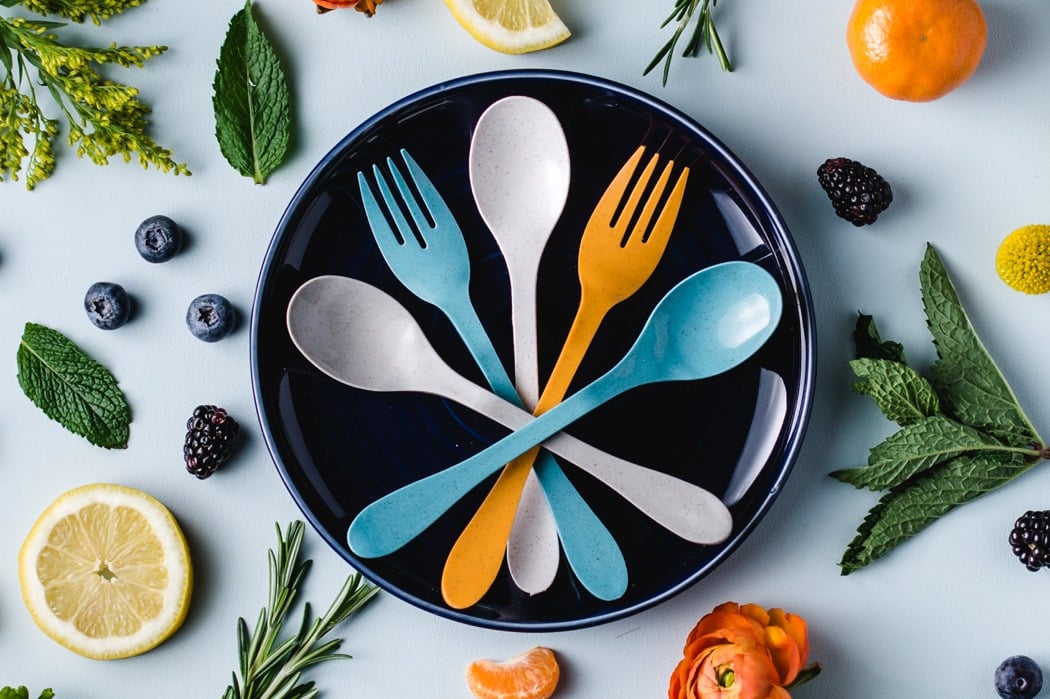

The Knork Eco has a pretty transparent objective. To A. remove non-biodegradable single-use plastics from our life-cycle, and to B. replace them with cutlery that's eco-friendly, biodegradable, and more importantly, much more than robust and comfortable to apply than those horrible disposable forks and spoons. The Knorks are made from a specialized fabric called Astrik, which combines sugarcane starch along with bamboo fibers. The result is a moldable polymer that's sturdy, looks and feels like glossy plastic, is nutrient-safe, dishwasher condom, and can biodegrade in 2 years. The Knork Eco is a spoon+fork set made from Astrik. It looks and feels exactly like plastic, and can practise everything plastic tin. The Knork cutlery comes in its own chic instance made from the bamboo-polymer too, allowing you to easily carry it effectually with you lot wherever yous go because the Knorks are much more than reliable and robust than most plastic spoons and forks. They come with a larger cantankerous-section, making them thicker and stiffer, and fifty-fifty integrate a broader handle with a finger-rest, allowing yous to apply them with the dexterity of metallic cutlery.
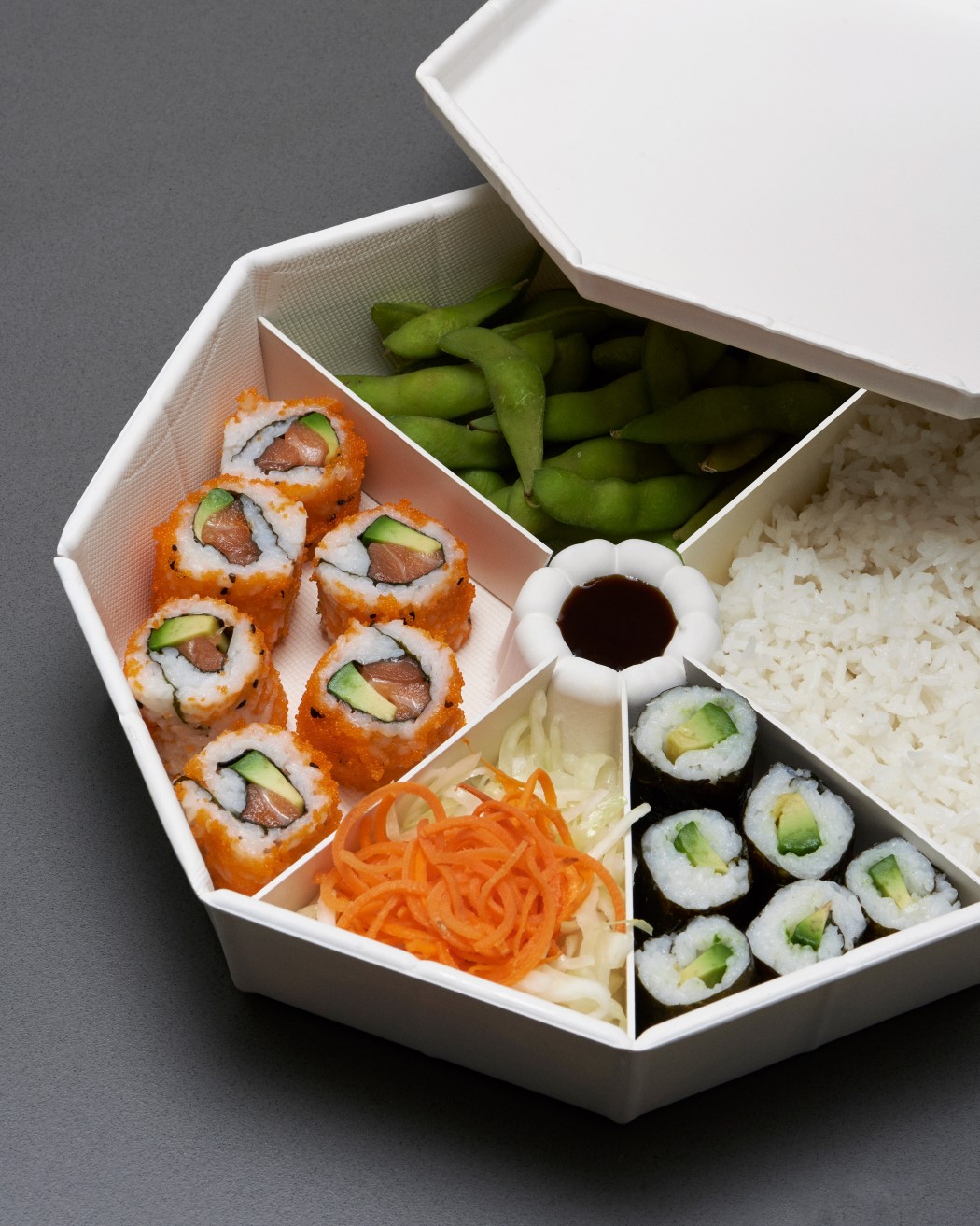
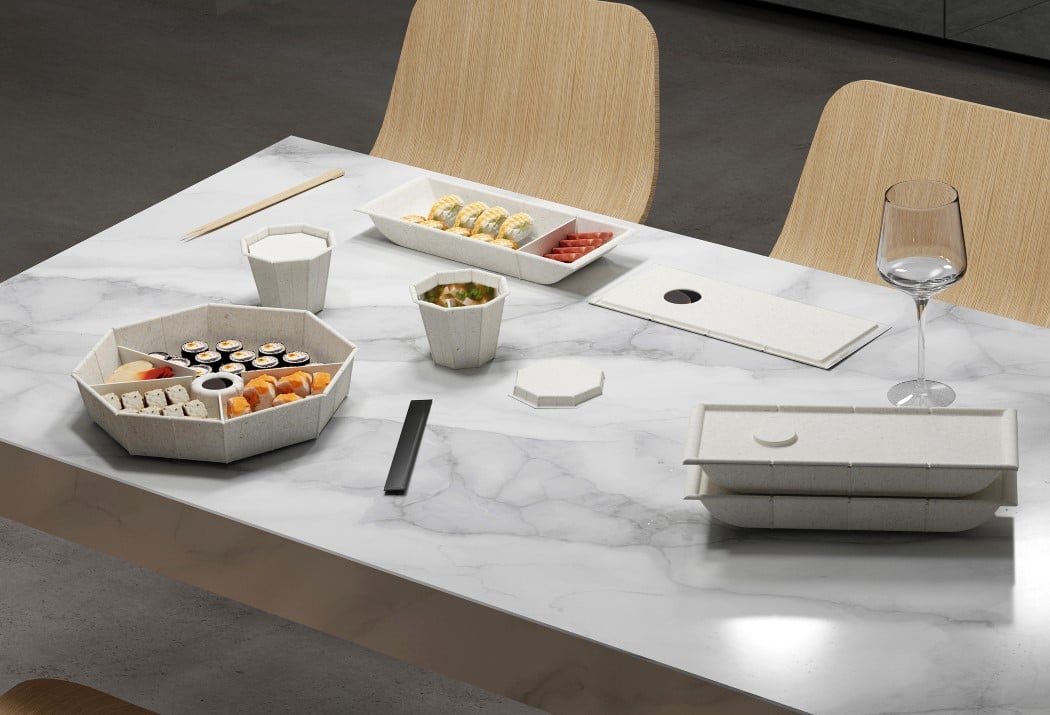
Meet the 'One Size', a template for parceling Asian food in a way that accommodates for tiny portions, solids, and liquids, and is in a higher place all biodegradable. Fabricated from a molded cellulose material that can easily be composted (and so you don't need to separate the food and packaging while throwing it out), the 1 Size features a modest unmarried-person tray, a torus-shaped family unit-meal tray, and glass and hat for soups, curries, and gravies. The trays tin can be used to store private food items, or portions of nutrient using small cellulose walls as dividers, so you've got a bento-box-styled takeaway container that's singular in nature. The single-person box can be slotted to create up to four separate compartments, while the family-meal box can be divided into 8 segments, creating smaller containers within the larger container, without the carbon footprint. The boxes come with a drinking glass and hat as well. The glass holds any liquid-based dish, while the lid itself doubles up as a miniature dish for wasabi or soy sauce. Piasek's design is made from molded cellulose, which primarily comprises recycled paper or natural fibers (recall of your egg-carton), pressed into the shape of the packaging.
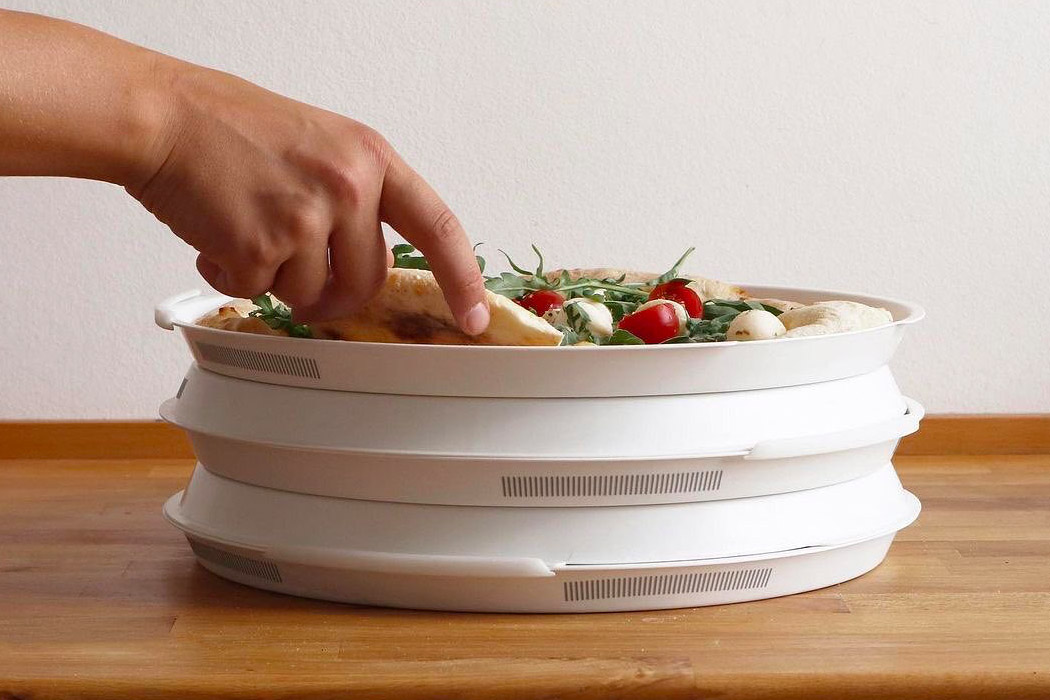

Finally, a round pizza box and information technology's reusable + sustainable! Designed past Marlene Bruch and Luise Hombach, the PIZZycle is an eco-friendly pizza packaging concept aims to exist an alternative to cardboard pizza boxes while taking a stand against the historic period-one-time debate of square vs round boxes. The common single-utilise boxes are left with food rest and therefore are accounted as non-recyclable waste material – so if y'all actually want to recycle that cardboard box you accept to clean it. Past being function of a deposit system, PIZZycle offers value to pizza restaurants, their customers too equally the environs. The packaging is composed of two identical, round shells, following the shape of a pizza. The box tin exist carried easily, cleaned in the dishwasher, and stored efficiently.

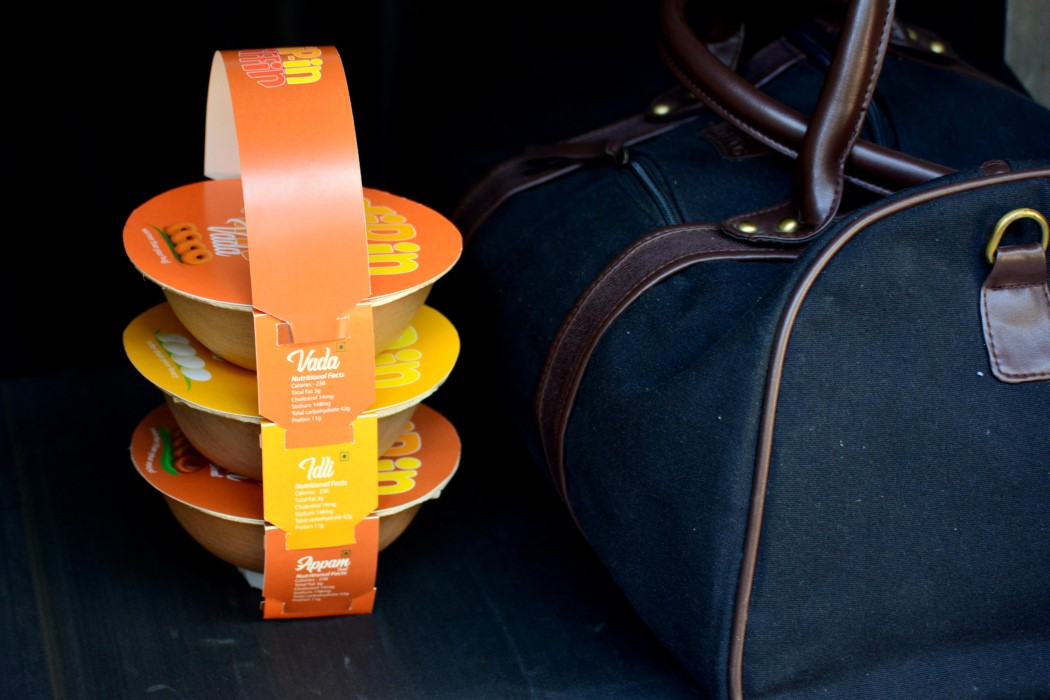
The Dip-In Lunch was designed primarily for dry/semi-dry foods. Since the packaging isn't air-tight, it tends to exclude foods that are gravy-based, limiting its options, just making it dandy for dry snacks similar doughnuts, sandwiches, etc (the Indian context uses savory doughnuts and fermented rice-cakes). The dejeuner'due south chief vessel is created using a dried, thermoformed Areca leaf, an eco-friendly alternative to conventional disposable plates. These vessels hold semi-dry, saucy, and oily foods really well also, offering a more than reliable culling to brown paper bags/boxes. The Areca bowls are covered with a unproblematic branded paper sleeve, and slots along the sleeve permit multiple boxes to be suspended to each other vertically, resembling the tiffin. The solution was devised mainly for airports, which see patrons quickly grabbing meals and eating them within hours of checking in. It doesn't use any glue, staples, or seals either, making information technology safe, and the all-natural makeup of the packaging means it can hands exist disposed of after use!
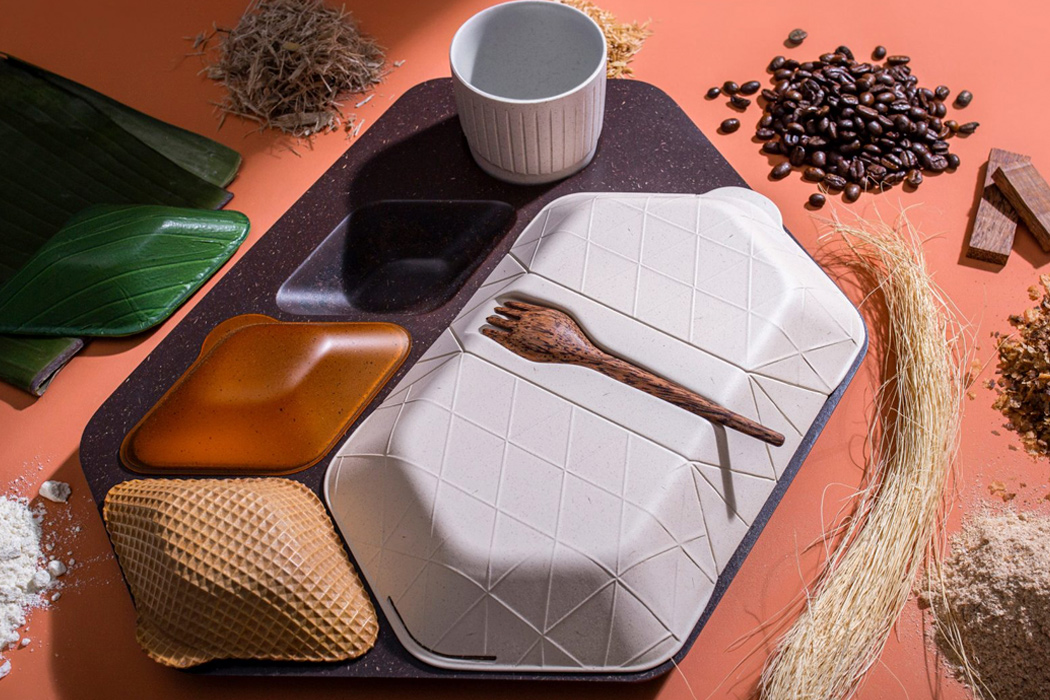
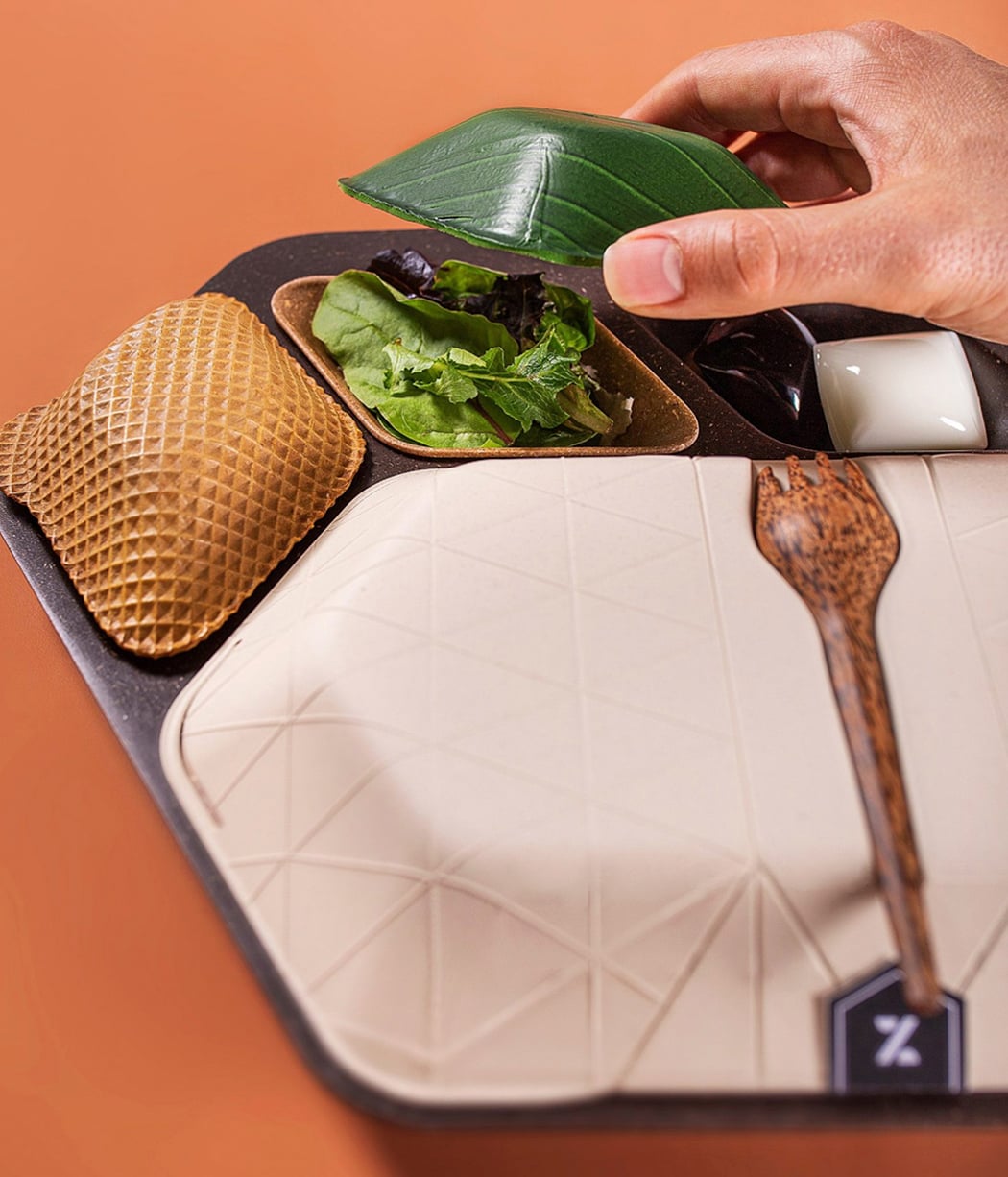
PriestmanGoode designed a line of eco-friendly and sustainable in-flights products as a role of their new exhibition at London's Design Museum called 'Get Onboard: Reduce. Reuse. Rethink'. Their light-green inflight meal service has completely transformed the conventional meal tray we are so used to receiving on a flight. "We've used a wide range of materials for our design concepts," says Rowan. And they've kept their word. Each element is either partially edible, reusable, soluble, or biodegradable. They've ditched plastic repast trays for partially edible ones fabricated from coffee grains and husks mixed with a lignin folder. The miscellaneous food containers that fit into the tray have been made from wheat bran. Assistant leaf or algae accept been combined with rice husk to create lids for side dishes like salad. Whereas a wafer has been used as a dessert hat, hence the materials symbolically reflect the food. Instead of having several pieces of single-use cutlery, the handy 'spork'- a combination of a fork and spoon- fabricated from kokosnoot wood has been adopted. The usual plastic containers for milk or sauces take been abased in exchange for edible pods created from soluble seaweed. This pattern philosophy and concept can exist used for takeaway boxes besides!
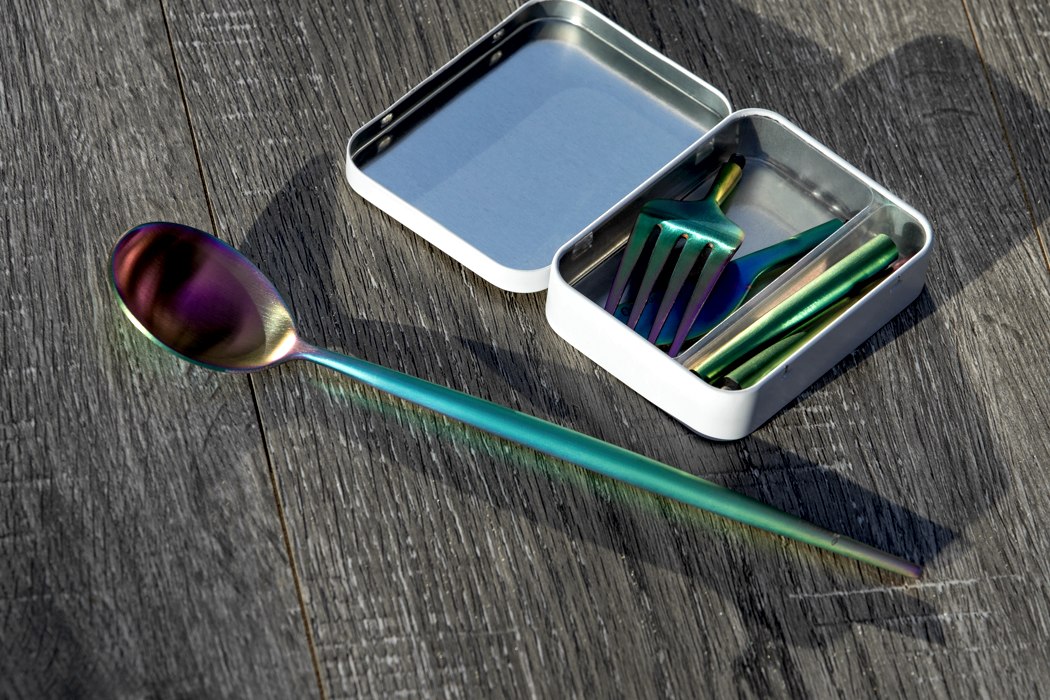
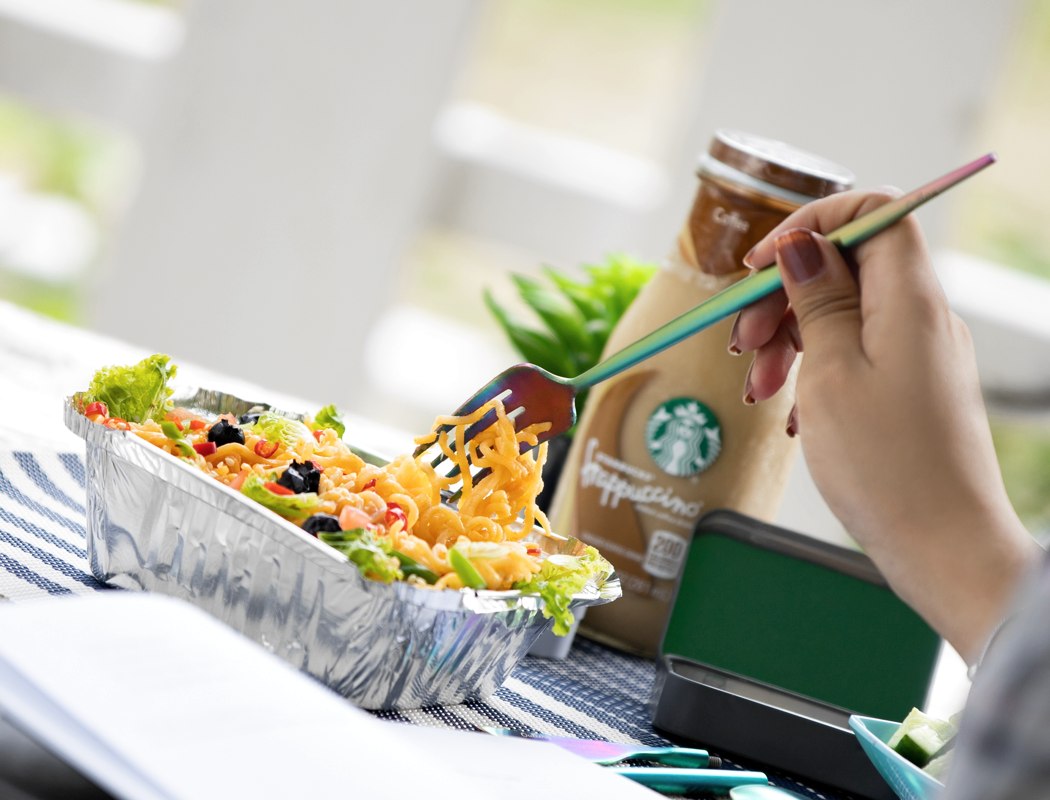
It's that time of the season where y'all put your money where your mouth is. Nosotros have heard enough nearly plastic pollution and how nosotros keep adding on to the trash. This applies mainly to the nutrient industry where takeaways equal to the use of plastic cutlery. Wooden spoons, knives, forks, and sporks seemed to the better alternative, but nothing in comparing to sustainable and re-useable stainless steel flatware. However, the problem of plastic cutlery still persists and you lot as a consumer can be the change. Apply the Pocket-Sized Reusable Cutlery & Chopsticks by Outlery. For those who don't know them, Outlery is an Eco-Witting company and have crafted this collapsible and portable ready of cutlery and chopsticks, that fit into tin boxes. The 3-office kit, screws on in a jiffy and tin be used on the become. Easy to clean and maintain, you can bear the box with you, wherever you go.
Source: https://www.yankodesign.com/2021/02/15/food-packaging-designs-that-make-your-next-takeaway-experience-easy-ergonomic-and-eco-friendly/
0 Response to "Food packaging designs that make your next takeaway experience easy, ergonomic and eco-friendly! - Yanko Design"
Post a Comment