Inndustrial Age Stuff That Splits in Two for Two People to Keep in Case They Find One Another Again
The forgotten medieval habit of 'two sleeps'
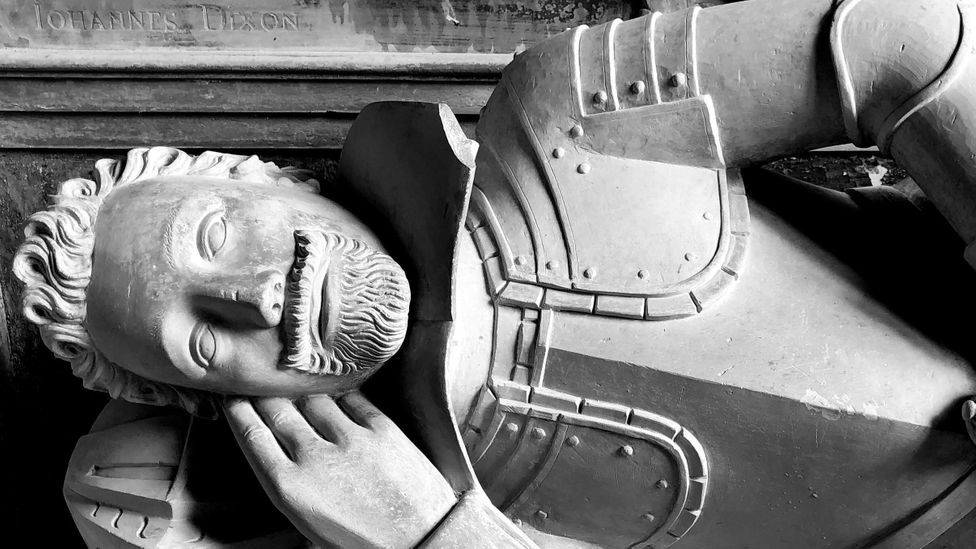
For millennia, people slept in two shifts – one time in the evening, and once in the morning. But why? And how did the addiction disappear?
I
It was around 23:00 on 13 April 1699, in a pocket-size village in the northward of England. Nine-year-former Jane Rowth blinked her optics open and squinted out into the moody evening shadows. She and her mother had just awoken from a short sleep.
Mrs Rowth got up and went over to the fireside of their modest dwelling, where she began smoking a pipe. Simply then, two men appeared past the window. They called out and instructed her to get ready to go with them.
Equally Jane afterward explained to a courtroom, her mother had plainly been expecting the visitors. She went with them freely – but start whispered to her daughter to "lye even so, and shee would come againe in the morning". Perhaps Mrs Rowth had some nocturnal task to complete. Or maybe she was in problem, and knew that leaving the house was a risk.
Either way, Jane'southward female parent didn't get to proceed her promise – she never returned home. That night, Mrs Rowth was brutally murdered, and her body was discovered in the post-obit days. The crime was never solved.
Nearly 300 years later on, in the early on 1990s, the historian Roger Ekirch walked through the arched entranceway to the Public Record Office in London – an imposing gothic building that housed the UK'south National Archives from 1838 until 2003. There, among the endless rows of ancient vellum papers and manuscripts, he establish Jane's testimony. And something most it struck him as odd.
Originally, Ekirch had been researching a volume about the history of night-time, and at the time he had been looking through records that spanned the era between the early Centre Ages and the Industrial Revolution. He was dreading writing the chapter on sleep, thinking that information technology was not only a universal necessity – but a biological constant. He was sceptical that he'd discover annihilation new.
So far, he had constitute court depositions particularly illuminating. "They're a wonderful source for social historians," says Ekirch, a professor at Virginia Tech, US. "They comment upon activity that's oftentimes unrelated to the crime itself."
But as he read through Jane'due south criminal deposition, two words seemed to carry an echo of a particularly tantalising detail of life in the 17th Century, which he had never encountered before – "first sleep".
"I can cite the original certificate almost verbatim," says Ekirch, whose exhilaration at his discovery is palpable fifty-fifty decades later.
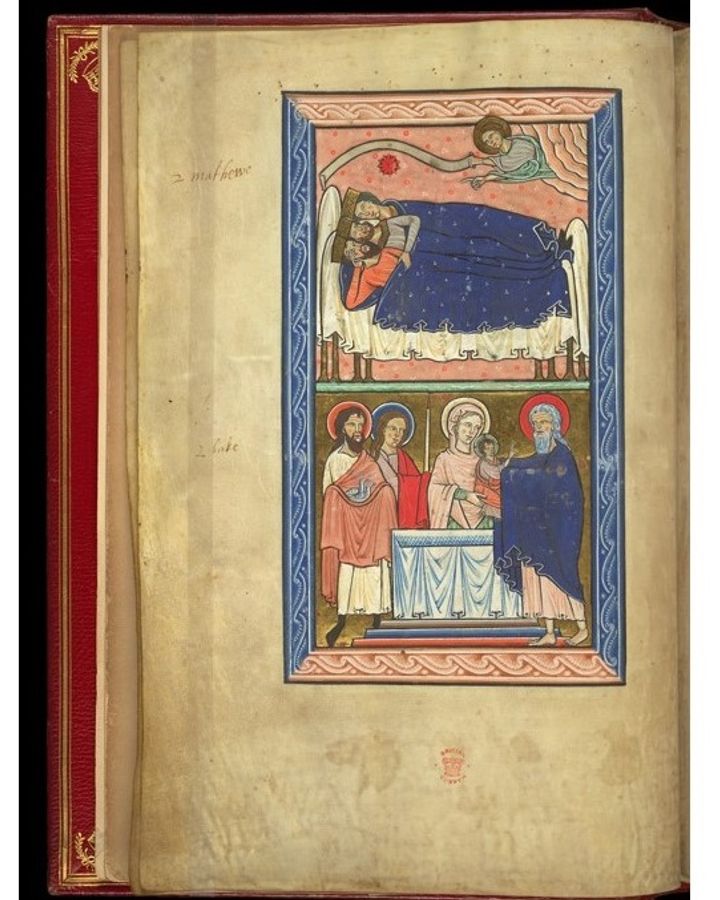
In the Heart Ages, communal sleeping was entirely normal – travellers who had only met would share the same bed, equally would masters and their servants (Credit: British Library)
In her testimony, Jane describes how just earlier the men arrived at their dwelling, she and her mother had arisen from their offset sleep of the evening. In that location was no further caption – the interrupted sleep was simply stated matter-of-factly, equally if it were entirely unremarkable. "She referred to it equally though it was utterly normal," says Ekirch.
A commencement sleep implies a second sleep – a dark divided into ii halves. Was this just a familial quirk, or something more than?
An omnipresence
Over the coming months, Ekirch scoured the archives and found many more references to this mysterious phenomenon of double sleeping, or "biphasic sleep" as he later on called it.
Some were fairly banal, such equally the mention by the weaver Jon Cokburne, who but dropped it into his testimony incidentally. But others were darker, such as that of Luke Atkinson of the East Riding of Yorkshire. He managed to squeeze in an early morning time murder betwixt his sleeps one night – and according to his wife, often used the time to frequent other people's houses for sinister deeds.
When Ekirch expanded his search to include online databases of other written records, information technology shortly became clear the phenomenon was more widespread and normalised than he had always imagined.
For a start, first sleeps are mentioned in 1 of the almost famous works of medieval literature, Geoffrey Chaucer's The Canterbury Tales (written between 1387 and 1400), which is presented equally a storytelling contest between a grouping of pilgrims. They're also included in the poet William Baldwin's Beware the Cat (1561) – a satirical volume considered past some to be the first ever novel, which centres around a homo who learns to understand the language of a grouping of terrifying supernatural cats, one of whom, Mouse-slayer, is on trial for promiscuity.
Merely that's just the offset. Ekirch found casual references to the organisation of twice-sleeping in every conceivable form, with hundreds in messages, diaries, medical textbooks, philosophical writings, newspaper articles and plays.
The exercise even fabricated it into ballads, such as "Old Robin of Portingale. "…And at the wakening of your first sleepe, Yous shall have a hot beverage fabricated, And at the wakening of your next sleepe, Your sorrows volition have a slake…"
Biphasic sleep was not unique to England, either – it was widely practised throughout the preindustrial world. In French republic, the initial sleep was the "premier somme"; in Italy, it was "primo sonno". In fact, Eckirch found evidence of the habit in locations every bit afar every bit Africa, South and Southeast Asia, Australia, Due south America and the Center East.
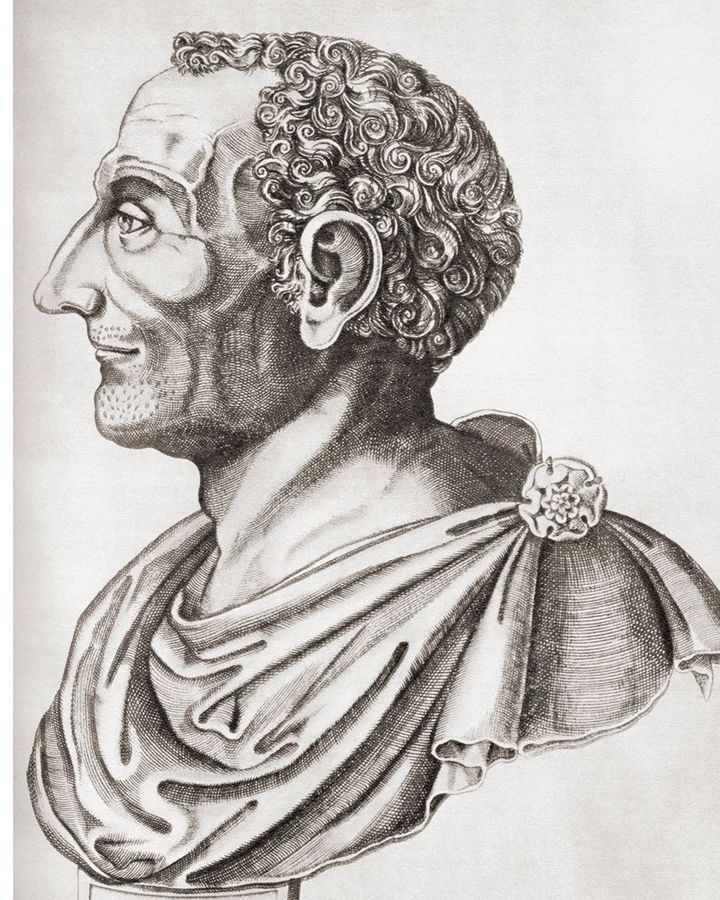
Like many Romans, the historian Livy may accept been a practitioner of biphasic sleep – he alludes to the method in his magnum opus, The History of Rome (Credit: Alamy)
I colonial account from Rio de Janeiro, Brazil in 1555 described how the Tupinambá people would eat dinner after their first slumber, while another – from 19th Century Muscat, Oman – explained that the local people would retire for their first slumber before 22:00.
And far from being a peculiarity of the Middle Ages, Ekirch began to suspect that the method had been the dominant way of sleeping for millennia – an aboriginal default that we inherited from our prehistoric ancestors. The beginning record Ekirch constitute was from the 8th Century BC, in the 12,109-line Greek epic The Odyssey, while the final hints of its existence dated to the early 20th Century, before it somehow slipped into oblivion.
How did it work? Why did people practice it? And how could something that was in one case and then completely normal, have been forgotten then completely?
A spare moment
In the 17th Century, a night of slumber went something like this.
From as early on as 21:00 to 23:00, those fortunate enough to afford them would begin flopping onto mattresses blimp with straw or rags – alternatively it might accept contained feathers, if they were wealthy – set up to slumber for a couple of hours. (At the bottom of the social ladder, people would have to make exercise with nestling downward on a scattering of heather or, worse, a blank earth floor – possibly fifty-fifty without a blanket.)
At the time, well-nigh people slept communally, and oft plant themselves snuggled up with a cosy array of bedbugs, fleas, lice, family members, friends, servants and – if they were travelling – total strangers.
To minimise any awkwardness, sleep involved a number of strict social conventions, such every bit fugitive physical contact or too much fidgeting, and there were designated sleeping positions. For example, female children would typically lie at one side of the bed, with the oldest nearest the wall, followed by the mother and father, so male children – again arranged by historic period – then not-family members.
A couple of hours after, people would brainstorm rousing from this initial slumber. The nighttime-time wakefulness usually lasted from around 23:00 to nigh 01:00, depending on what time they went to bed. It was non generally caused past noise or other disturbances in the night – and neither was it initiated by whatever kind of alarm (these were only invented in 1787, by an American man who – somewhat ironically – needed to wake up on time to sell clocks). Instead, the waking happened entirely naturally, simply as it does in the morning.
The period of wakefulness that followed was known every bit "the watch" – and it was a surprisingly useful window in which to get things done. "[The records] draw how people did just about annihilation and everything after they awakened from their first sleep," says Ekirch.
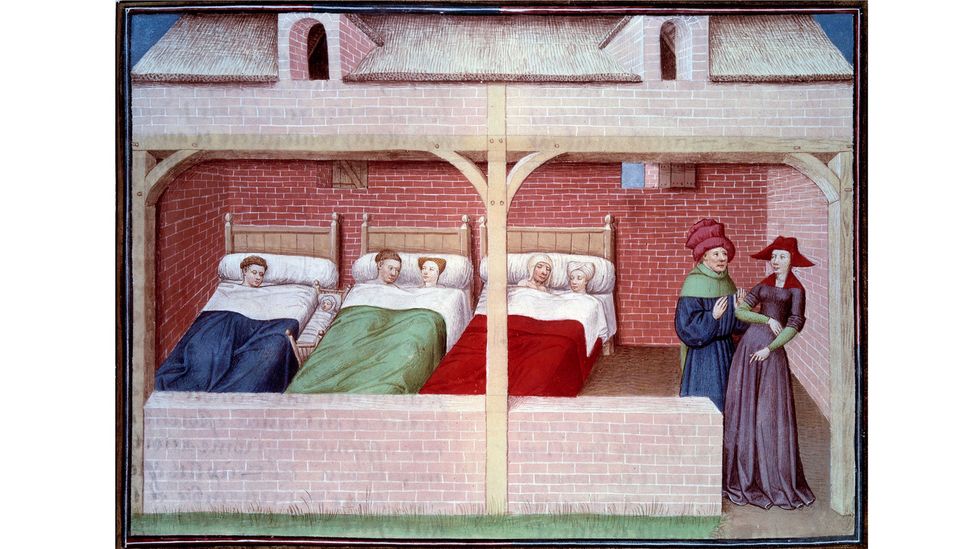
Communal sleeping meant that people ordinarily had someone to chat with when they woke up for "the watch" (Credit: Getty Images)
Under the weak glow of the Moon, stars, and oil lamps or "rush lights" – a kind of candle for ordinary households, fabricated from the waxed stems of rushes – people would tend to ordinary tasks, such as adding forest to the fire, taking remedies, or going to urinate (often into the fire itself).
For peasants, waking upwardly meant getting back downwards to more serious piece of work – whether this involved venturing out to check on subcontract animals or conveying out household chores, such as patching fabric, combing wool or peeling the rushes to exist burned. One servant Ekirch came across even brewed a batch of beer for her Westmorland employer 1 nighttime, between midnight and 02:00. Naturally, criminals took the opportunity to skulk around and make trouble – like the murderer in Yorkshire.
Only the lookout was too a time for religion.
For Christians, there were elaborate prayers to be completed, with specific ones prescribed for this exact parcel of time. 1 male parent called it the most "profitable" hour, when – after digesting your dinner and casting off the labours of the world – "no one will wait for y'all except for God".
Those of a philosophical disposition, meanwhile, might apply the watch as a peaceful moment to ruminate on life and ponder new ideas. In the late 18th Century, a London tradesman even invented a special device for remembering all your virtually searing nightly insights – a "nocturnal remembrancer", which consisted of an enclosed pad of parchment with a horizontal opening that could be used as a writing guide.
But nearly of all, the watch was useful for socialising – and for sex activity.
Equally Ekirch explains in his book, At Day's Close: A History of Nighttime, people would often just stay in bed and chat. And during those foreign twilight hours, bedfellows could share a level of informality and casual chat that was hard to achieve during the day.
For husbands and wives who managed to navigate the logistics of sharing a bed with others, it was also a convenient interval for physical intimacy – if they'd had a long twenty-four hour period of transmission labour, the first sleep took the edge off their exhaustion and the menstruation afterwards was idea to exist an excellent time to conceive copious numbers of children.
Once people had been awake for a couple of hours, they'd usually head dorsum to bed. This next step was considered a "morning" sleep and might final until dawn, or later. Merely as today, when people finally woke up for adept depended on what fourth dimension they went to bed.
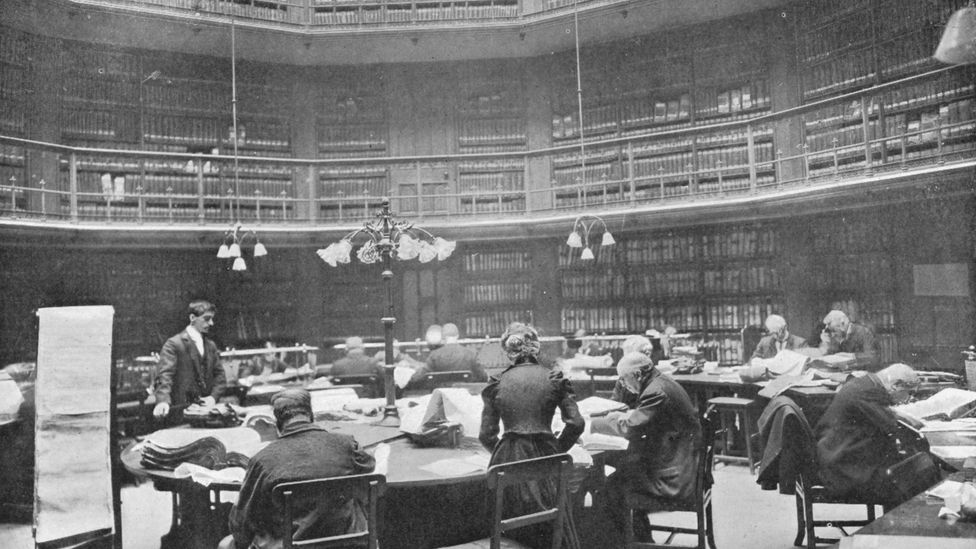
The Public Record Office was home to thousands of criminal depositions from the medieval era, which are now kept at The National Archives in Kew (Credit: Getty Images)
An ancient accommodation
According to Ekirch, there are references to the system of sleeping twice peppered throughout the classical era, suggesting that it was already common then. It's casually dropped into works by such illustrious figures every bit the Greek biographer Plutarch (from the First Century Advert), the Greek traveller Pausanias (from the 2nd Century AD), the Roman historian Livy and the Roman poet Virgil.
Later on, the practise was embraced by Christians, who immediately saw the watch'due south potential every bit an opportunity for the recital of psalms and confessions. In the Sixth Century AD, Saint Benedict required that monks rise at midnight for these activities, and the idea somewhen spread throughout Europe – gradually filtering through to the masses.
Just humans aren't the only animals to observe the benefits of dividing upwardly slumber – information technology's widespread in the natural globe, with many species resting in two or even several separate stretches. This helps them to remain active at the most beneficial times of day, such every bit when they're most likely to observe food while avoiding catastrophe upwardly as a snack themselves.
One case is the ring-tailed lemur. These iconic Madagascan primates, with their spooky cherry eyes and upright black-and-white tails, have remarkably like sleeping patterns to preindustrial humans – they're "cathemeral", pregnant they're up at night and during the 24-hour interval.
"At that place are broad swaths of variability amid primates, in terms of how they distribute their activity throughout the 24-hour menstruum," says David Samson, director of the sleep and human evolution laboratory at the University of Toronto Mississauga, Canada. And if double-sleeping is natural for some lemurs, he wondered: might it be the way nosotros evolved to slumber too?
Ekirch had long been harbouring the same hunch. But for decades, there was aught concrete to evidence this – or to illuminate why information technology might have vanished.
Then dorsum 1995, Ekirch was doing some online reading late one night when he institute an article in the New York Times near a sleep experiment from a few years before.
The research was conducted past Thomas Wehr, a sleep scientist from the National Institute of Mental Health, and involved xv men. Afterwards an initial calendar week of observing their normal sleeping patterns, they were deprived of artificial illumination at night to shorten their hours of "daylight" – whether naturally or electrically generated – from the usual 16 hours to merely ten. The rest of the fourth dimension, they were confined to a bedroom with no lights or windows, and fully enveloped in its velvety blackness. They weren't allowed to play music or exercise – and were nudged towards resting and sleeping instead.
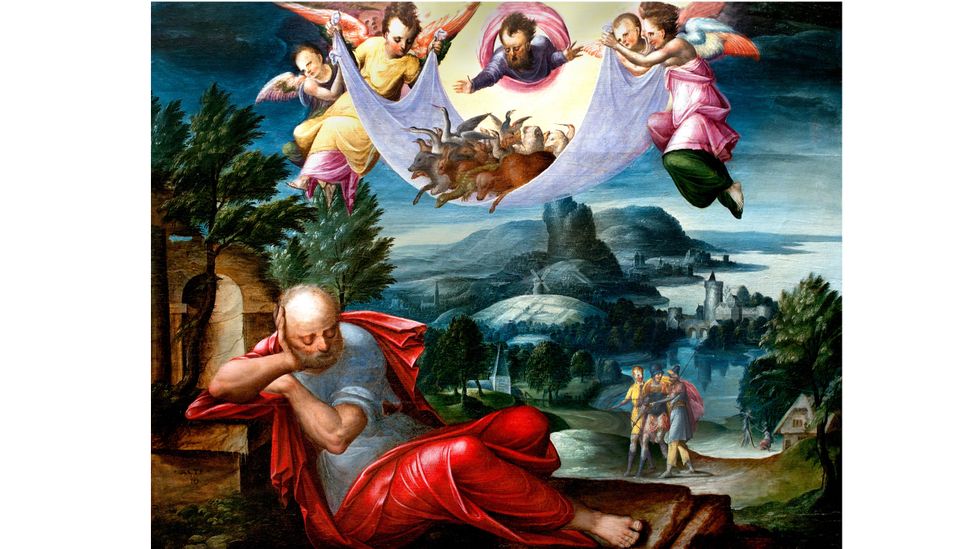
Ekirch wonders if today people might remember fewer dreams than our ancestors did, because information technology'due south less common to wake up in the eye of the nighttime (Credit: Alamy)
At the start of the experiment, the men all had normal nocturnal habits – they slept in i continuous shift that lasted from the late evening until the morning. Then something incredible happened.
After 4 weeks of the 10-hour days, their sleeping patterns had been transformed – they no longer slept in one stretch, but in ii halves roughly the same length. These were punctuated past a one-to-iii-hour period in which they were awake. Measurements of the sleep hormone melatonin showed that their circadian rhythms had adjusted besides, and then their sleep was altered at a biological level.
Wehr had reinvented biphasic sleep. "It [reading about the experiment] was, apart from my wedding ceremony and the birth of my children, probably the nearly heady moment in my life," says Ekirch. When he emailed Wehr to explain the boggling match betwixt his own historical research, and the scientific study, "I think I tin can tell yous that he was equally as exhilarated as I was," he says.
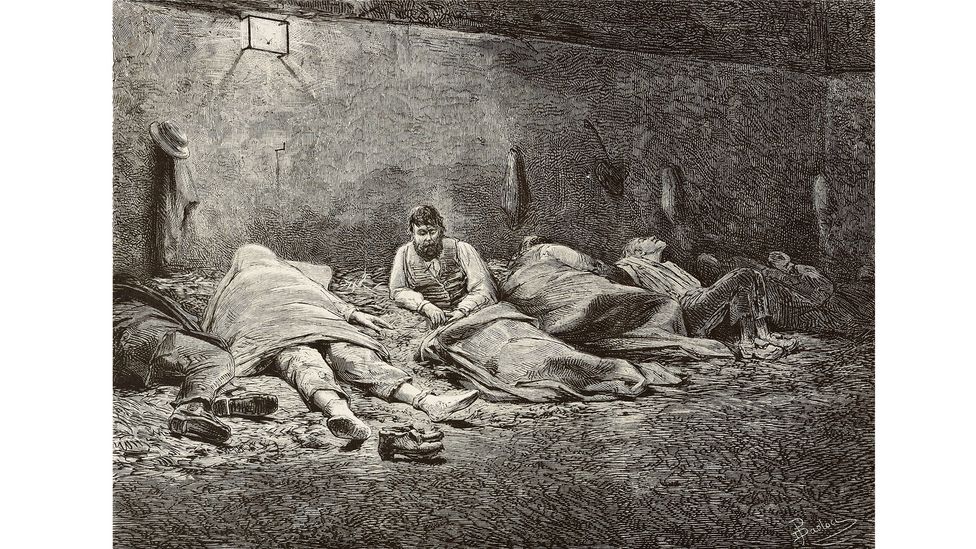
For much of human history, those who couldn't afford a bed had to sleep on straw or other stale vegetation (Credit: Getty Images)
More recently, Samson'southward own enquiry has backed upward these findings – with an exciting twist.
Back in 2015, together with collaborators from a number of other universities, Samson recruited local volunteers from the remote community of Manadena in northeastern Madagascar for a study. The location is a large village that backs on to a national park – and there is no infrastructure for electricity, then nights are well-nigh every bit dark as they would accept been for millennia.
The participants, who were mostly farmers, were asked to wear an "actimeter" – a sophisticated activity-sensing device that tin be used to track sleep cycles – for ten days, to rail their sleep patterns.
"What we found was that [in those without artificial low-cal], at that place was a period of activity right after midnight until almost 01:00-01:thirty in the morning," says Samson, "so it would drop back to sleep and to inactivity until they woke up at 06:00, usually coinciding with the ascension of the Sun."
As it turns out, biphasic sleep never vanished entirely – it lives on in pockets of the world today.
A new social force per unit area
Collectively, this research has also given Ekirch the explanation he had been peckish for why much of humanity abandoned the two-slumber system, starting from the early 19th Century. As with other recent shifts in our behaviour, such as a move towards depending on clock-time, the answer was the Industrial Revolution.
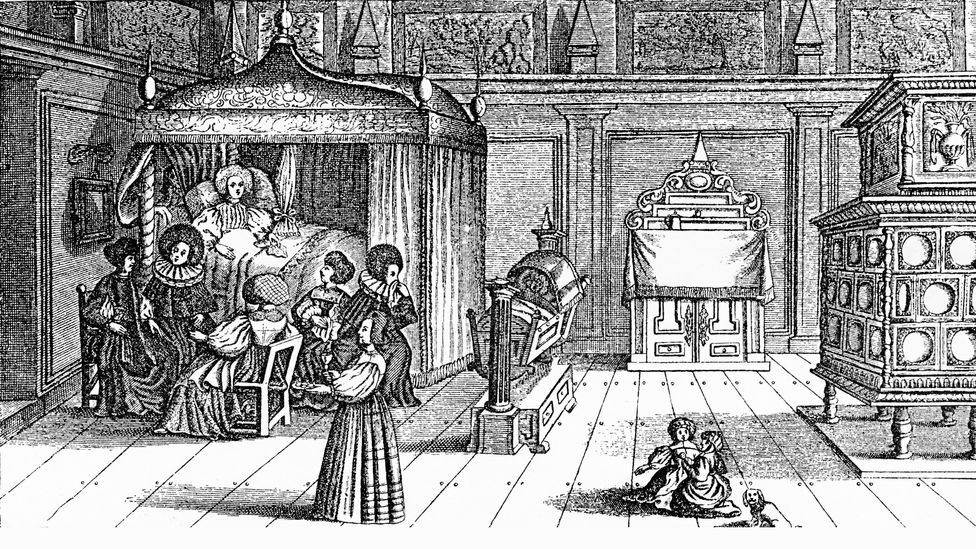
In the 17th Century, wealthy elites usually slept in four-poster wooden beds with curtains, to keep the occupant warmer and exclude the prying optics of visitors (Credit: Alamy)
"Artificial illumination became more prevalent, and more than powerful – commencement there was gas [lighting], which was introduced for the first time ever in London," says Ekirch, "and and so, of course, electric lighting toward the stop of the century. And in addition to altering people's circadian rhythms. artificial illumination also naturally allowed people to stay upwardly subsequently."
Still, though people weren't going to bed at 21:00 anymore, they still had to wake up at the same time in the morning – so their residual was truncated. Ekirch believes that this made their slumber deeper, considering information technology was compressed.
Likewise as altering the population's cyclic rhythms, the artificial lighting lengthened the first slumber, and shortened the second. "And I was able to trace [this], almost decade by decade, over the course of the 19th Century," says Ekirch.
(Intriguingly, Samson'southward study in Madagascar involved a 2d office – in which half the participants were given artificial lights for a week, to come across if they made whatsoever difference. And this instance, the researchers found that information technology had no impact on their segmented slumber patterns. Withal, the researchers indicate out that a week may not exist long enough for artificial lights to lead to major changes. Then the mystery continues…)
Even if artificial lighting was not fully to blame, past the end of the 20th Century, the division between the two sleeps had completely disappeared – the Industrial Revolution hadn't simply changed our applied science, only our biology, likewise.
A new feet
1 major side-effect of much of humanity's shift in sleeping habits has been a change in attitudes. For one thing, we quickly began shaming those who oversleep, and developed a preoccupation with the link between waking up early on and being productive.
"But for me, the nearly gratifying aspect of all this," says Ekert, "relates to those who suffer from middle-of-the-night indisposition." He explains that our sleeping patterns are at present and so altered, any wakefulness in the centre of the night can lead us to panic. "I don't hateful to make calorie-free of that – indeed, I endure from sleep disorders myself, really. And I have medication for it… " But when people acquire that this may have been entirely normal for millennia, he finds that it lessens their anxiety somewhat.
However, before Ekirch's research spawns a spin off of the Paleo diet, and people start throwing away their lamps – or worse, artificially splitting their sleep in two with alarm clocks – he's corking to stress that the abandonment of the two-sleep organization does non mean the quality of our slumber today is worse.
Despite near-constant headlines about the prevalence of sleep problems, Ekirch has previously argued that, in some means, the 21st Century is a gilded age for sleep – a fourth dimension when most of united states no longer take to worry about being murdered in our beds, freezing to decease, or flicking off lice, when we can sleep without pain, the threat of fire, or having strangers snuggled upwards adjacent to us.
In short, single periods of slumber might not exist "natural". And nonetheless, neither are fancy ergonomic mattresses or modernistic hygiene. "More seriously, at that place's no going back because conditions have changed," says Ekirch.
So, we may be missing out on confidential midnight chats in bed, psychedelic dreams, and night-time philosophical revelations – only at to the lowest degree we won't wake up covered in angry ruddy bites.
--
* The epitome of The Dream of the Magi is used with the kind permission of the British Library, where it forms office of their Catalogue of Illuminated Manuscripts.
--
Zaria Gorvett is a senior journalist for BBC Future and tweets@ZariaGorvett
--
Join one million Hereafter fans by liking us on Facebook, or follow us on Twitter or Instagram.
If yous liked this story, sign up for the weekly bbc.com features newsletter, called "The Essential List" – a handpicked selection of stories from BBC Future, Civilisation, Worklife, Travel and Reel delivered to your inbox every Friday.
Source: https://www.bbc.com/future/article/20220107-the-lost-medieval-habit-of-biphasic-sleep
0 Response to "Inndustrial Age Stuff That Splits in Two for Two People to Keep in Case They Find One Another Again"
Post a Comment